
 Help Center
How to Size Your Labels for Round or Odd-Shaped Containers
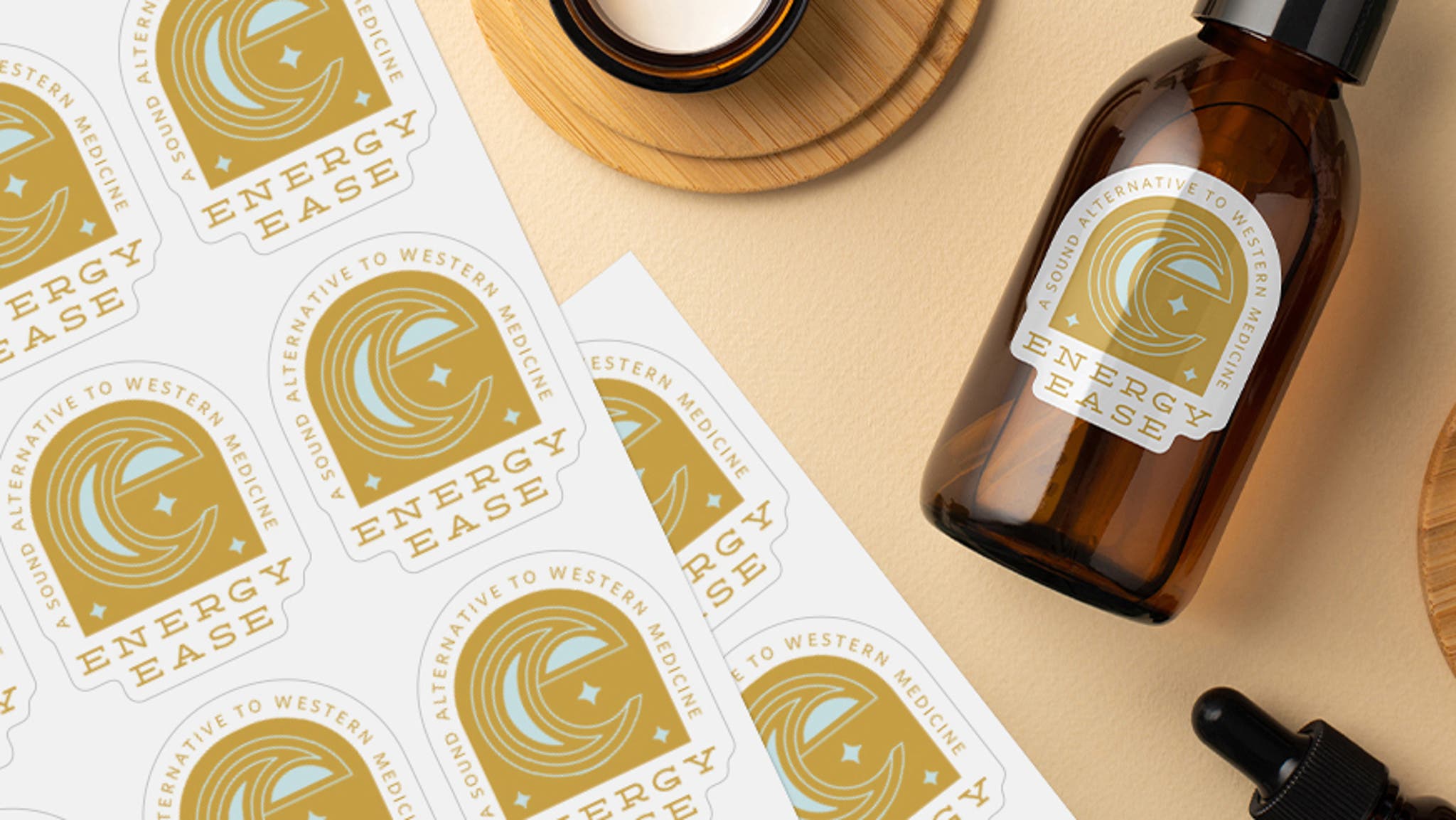
Creating the perfect label for your product is both an art and a science, especially when your containers aren’t your standard flat, rectangular surfaces. Round jars, curved bottles, or oddly shaped containers like hexagonal tins or tapered tubes bring unique challenges to label design.
Here at StickerYou, we’ve helped countless creators bring their branding visions to life, and we’re here to share our expertise on how to size your labels for these tricky containers. This blog post will walk you through the process with practical tips, helping to ensure your labels look professional, stick securely, and showcase your brand beautifully.
Why Proper Label Sizing Matters
Before diving into the how-to, let’s talk about why getting the proper label size is so important. A poorly sized label can ruin the aesthetic of your product. It could even peel off prematurely, or fail to convey key information. For round or odd-shaped containers, the curvature or unique geometry can magnify these issues.
A label that’s too large can wrinkle or overlap, while one that’s too small could look awkward or leave unsightly gaps. Proper sizing ensures your label fits snugly, adheres well, and communicates your brand’s message with clarity and style.
Step 1: Understand Your Container’s Shape and Dimensions
The first step is to know your container inside and out. Round containers, like jars or bottles, require labels that account for their circumference and curvature. Odd-shaped containers, like hexagonal jars or tapered bottles, require even more precision. Here’s how to start:
- Measure the Circumference: For round containers, wrap a flexible measuring tape around the container at its widest point to determine the circumference. This gives you the maximum width your label can be if you want it to wrap fully around. For a partial wrap, decide how much of the container you want the label to cover (e.g., half the circumference).
- Measure the Height: Measure the flat or usable surface area where the label will sit. For tapered or curved containers, note where the surface slopes or changes shape, as this will affect how the label adheres.
- Account for Odd Shapes: For non-round containers, sketch the surface where the label will go. For example, a hexagonal jar has flat sides, so measure the width and height of one of its faces. For tapered or irregular shapes, consider where the label will sit and whether it needs to wrap around corners or edges.
Sticker You Tip: If your container has a complex shape, create a paper mock-up of your label and wrap it around the container to visualize fit before designing.
Step 2: Factor in Curvature and Taper
Curved surfaces require special attention because labels don’t lie flat like they would on a square box. Here’s how to handle curvature:
- Round Containers: Labels for round containers often wrap around the entire surface or a portion of it. To avoid wrinkling, ensure the label’s width doesn’t exceed the container’s circumference. For smaller round containers, like lip balm tubes, a label that’s 80-90% of the circumference often looks best, leaving a small gap for a clean finish.
- Tapered Containers: Bottles that narrow at the top or bottom require labels designed to follow the taper. A trapezoid-shaped label, wider at the bottom and narrower at the top, can mimic the container’s shape for a seamless fit. Alternatively, use a smaller rectangular label that sits on the widest, most stable part of the container.
- Odd Shapes: For containers with multiple flat surfaces (like hexagonal jars), design labels for each face separately or create a wraparound label that accounts for the angles. For truly irregular shapes, consider die-cut labels that closely mimic the contours of the container.
Step 3: Design with Flexibility in Mind
When designing labels for round or odd-shaped containers, flexibility is key. Here are some design tips to ensure your labels look great and stick well:
- Leave a Margin: Avoid placing critical text or graphics too close to the label’s edges. A 1/8-inch margin ensures that slight misalignments during application don’t cut off important design or informational elements.
- Account for Stretch and Wrap: On round containers, labels stretch slightly as they wrap around the curve. Design with this in mind, keeping text and logos centered where the curvature is most pronounced. For wraparound labels, make sure the design aligns seamlessly if you want the ends to meet.
- Choose the Right Material: At StickerYou, we offer a variety of vinyl labels that are durable and flexible - perfect for curved or irregular surfaces. These materials conform to the container’s shape without peeling or bubbling, unlike paper labels, which may have adhesion issues on non-flat surfaces.
Step 4: Prototype and Test-Test-Test!
Before committing to a full print run, test your label size and design to ensure they are accurate. You can order a small batch of custom labels from StickerYou and apply them to your containers to test. Remember to check for:
- Fit and Alignment: Does the label wrap smoothly without wrinkles or gaps? Does it align with the container’s features, like a logo embossed on the glass?
- Readability: Is the text legible from different angles? Curved surfaces can distort text, so make sure your fonts are bold and clear.
- Adhesion: Does the label adhere securely, especially along the edges or corners? If not, you may need a stronger adhesive or a different material.
Testing helps you catch any sort of issues early, saving time and money. Plus, seeing your label on the actual container can spark new design ideas!
Step 5: Consider Application Techniques
Applying labels to round or odd-shaped containers can sometimes be tricky. For round containers, start at one edge and slowly wrap the label around, smoothing it as you go to avoid air bubbles. For odd shapes, align the label with a flat surface or key feature (like a corner or seam) to ensure consistency. If you’re labeling in bulk, consider investing in a label applicator for precision and efficiency.
StickerYou Tips for a Professional Finish
- Use Die-Cut Labels: For odd-shaped containers, die-cut labels that match the container’s contours create a polished, custom look.
- Think About Branding: Ensure your label’s size allows enough space for your logo, product name, and any required details (like ingredients or barcodes) without feeling cramped.
- Test in Real Conditions: If your product will be refrigerated, exposed to moisture, or handled frequently, test how the label holds up. StickerYou’s waterproof vinyl labels are ideal for these scenarios.
Sizing labels for round or odd-shaped containers requires a mix of careful measurement, thoughtful design, and real-world testing (not to mention a little basic math and geometry!).
By understanding your container’s shape, accounting for curvature, and choosing flexible, high-quality materials, you can create labels that enhance your product’s appeal and can stand up to everyday use.
At StickerYou, we’re passionate about helping you bring your vision to life with custom labels tailored to any container, no matter how unique.
Ready to get started? Upload your design or use our online tool to create your labels. Have fun experimenting with sizes, shapes, and materials to find the perfect fit for your brand.
With these tips, you’re well-equipped to tackle the challenge of labeling round or odd-shaped containers. Happy designing!